MMIW May 5: Why We Wear Red Today
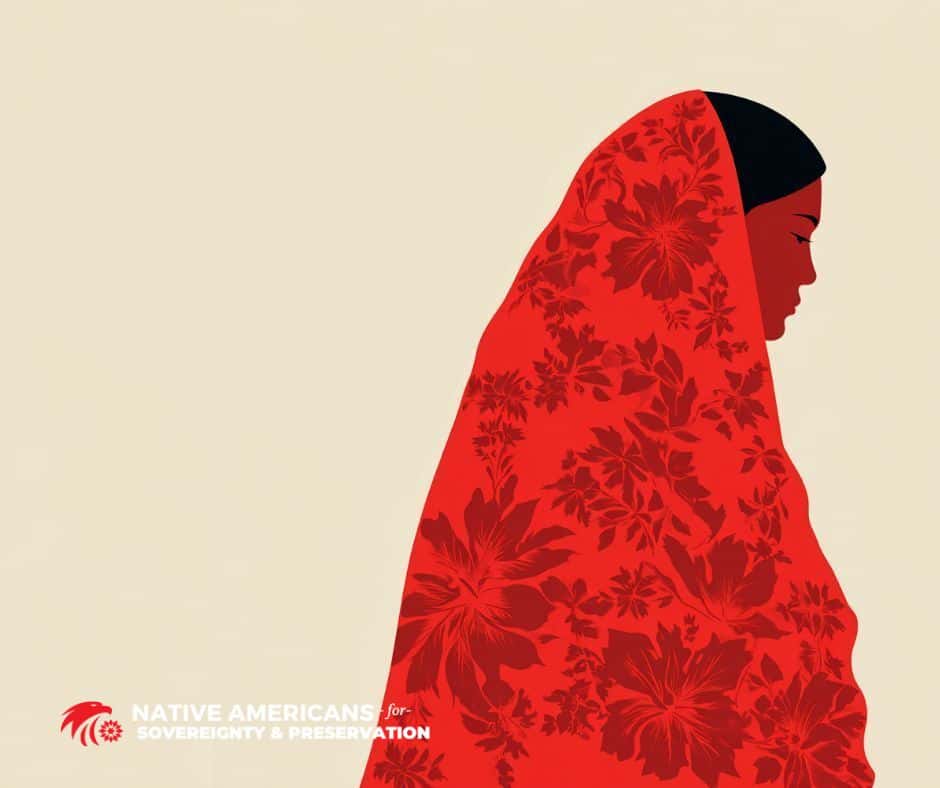
Today is MMIW May 5, and across Indian Country we wear red because our missing relatives deserve to be remembered!
MMIW May 5 Marks a Crisis That Demands Answers
Missing and Murdered Indigenous Women Awareness Day arrives every MMIW May 5 with sobering reminders. Violence in tribal communities remains one of the most urgent public safety issues facing Native America. The MMIW movement has carried this fight for decades. The broader MMIP framing reminds us that Native men and boys are also stolen from our communities at staggering rates. Homicide ranks among the leading causes of death for American Indian and Alaska Native people aged 1 to 54. Some Native communities face homicide rates more than ten times the national average.
Native women die by homicide at rates ten times higher than other groups. One in three Native women report being raped. Forty percent of women identified in sex trafficking cases are American Indian or Alaska Native. These figures are not statistics on a page. They are mothers, sisters, daughters, aunties, grandmothers, fathers, and brothers. Their families wake up every morning still searching for answers.
Federal Action Is Producing Real MMIW Results
Operation Not Forgotten is finally moving the needle on cold cases. FBI personnel work alongside the Bureau of Indian Affairs Missing and Murdered Unit to support more than 330 investigations. Their tools include ground-penetrating radar, underwater cameras, and sonar searches to locate missing relatives. In Fiscal Year 2025 alone, the FBI’s Indian Country program charged 1,260 individuals, made 1,123 arrests, recovered 304 weapons, and located 458 child victims. Operation Not Forgotten now sits in its third deployment. It has supported over 760 cases and delivered services to nearly 2,000 victims and family members.
________
Join Our Membership - Free!
________This work began under President Trump’s Executive Order 13898, which established the Task Force on Missing and Murdered American Indians and Alaska Natives. The renewed federal commitment is producing the accountability tribal families have demanded for decades.
Health Care Anchors the MMIW May 5 Response
The Indian Health Service has stood up forensic nursing programs at 37 facilities across the ITU system. IHS partners with the Texas A&M University Center of Excellence in Forensic Nursing to train providers in trauma-informed, culturally responsive care. IHS Director of Clinical and Preventive Services Clayton Fulton previously served the Muscogee Creek Nation Office of the Attorney General. He puts it plainly: partnerships matter.
Public safety in tribal communities depends on tribal, state, and federal law enforcement working hand-in-hand with health care partners. Trained forensic examiners now collect evidence that gives prosecutors a fighting chance at justice. Resources like the StrongHearts Native Helpline at 844-7NATIVE and the National Human Trafficking Hotline give Our Relatives a confidential lifeline 24 hours a day.
MMIW May 5 Calls Us to Common Ground
Ending this crisis is not a partisan question. Protecting Native women, children, and men from violence is common sense. The MMIW and MMIP movements have built the awareness, the data, and the political will that drive this work forward. Tribal governments, federal agencies, state law enforcement, and Native-owned organizations all have a role to play. The progress we see through Operation Not Forgotten, the MMIP Regional Outreach Program, and IHS forensic nursing expansion proves coordinated effort works. Wear red today. Say their names. Stand with the tribal officers, forensic nurses, victim advocates, and federal investigators who show up every day for Indian Country!
Read more from NASP on tribal sovereignty and Native public safety in our Indian Country news section and our tribal advocacy resources.


